
This post may contain affiliate links. Please see our disclosure policy.
I’ve been researching my family history for more than 20 years. Along the way, I’ve found ancestors I never knew existed, tackled some challenging research problems, and learned quite a bit about what works (and what doesn’t).
Which got me thinking: If I were starting my genealogy research today, knowing everything I’ve learned over the years, what would I do differently?
Genealogy has changed considerably since I started. We have access to more historical records, better search tools, DNA and now artificial intelligence (AI) that can help us approach research problems in entirely new ways.
But better technology doesn’t automatically make us better researchers. How we approach our research still matters.
Here are seven things I’d do differently if I were starting today. Some involve technology, but others are lessons I wish I’d understood much earlier.
Table of Contents
- 1. I Wouldn’t Rush to Build a Big Family Tree
- 2. I’d Spend Less Time Searching and More Time Analyzing
- 3. I’d Revisit Previous Research With Fresh Eyes and New Tools
- 4. I’d Use AI as a Research Partner, Not an Answer Machine
- 5. I’d Look Beyond the Major Genealogy Websites Much Earlier
- 6. I’d Research Entire Families and Communities, Not Just My Direct Ancestors
- 7. I’d Organize My Research Thinking, Not Just My Files
- What Would I Do Differently Most of All?
1. I Wouldn’t Rush to Build a Big Family Tree
One of the most exciting parts of beginning genealogy is discovering another generation. You find your great-grandparents, then their parents, and suddenly you’re wondering just how far back you can trace that family line.
I understand the appeal! But if I were starting over, I wouldn’t be so quick to move on to the next generation.
I’d spend more time understanding each ancestor and making sure the evidence supported the relationships in my tree. I’d also be interested in more than names, dates, and places.
What work did my ancestors do? Who were their neighbors? What was happening in their communities that might have influenced their decisions?
Those questions can lead us to records we’d never consider if our only goal were identifying the next generation.
I’d still want to trace my family lines as far back as possible. I’d just be more deliberate about the process, taking time to understand the people I was researching rather than concentrating on the size of my family tree.
2. I’d Spend Less Time Searching and More Time Analyzing
Of all the things I’d change, this one is near the top of my list.
I frequently find that the answers to genealogy brick walls, or at least clues that could move our research forward, are already sitting in our files.
We don’t necessarily need another record. We need a better understanding of the records we already have.
Think about how easy it is to spend an afternoon searching for an ancestor. You check census records, explore newspaper databases, follow record hints, and perhaps try another genealogy website. Before you know it, several hours have passed.
But how much time did you spend actually studying the records you’ve collected?
If I were starting today, I’d make deeper analysis a regular part of my research process.
I’d create timelines to see how records fit together, compare information across documents, and look carefully at inconsistencies. Most importantly, I’d distinguish between what the evidence actually establishes and what I’ve assumed.
Consider a census record you’ve had for years. You may have used it to identify an ancestor’s age, birthplace, and family members. But have you looked closely at the neighbors? Compared the household with earlier and later census records? Considered what the occupation or location might tell you?
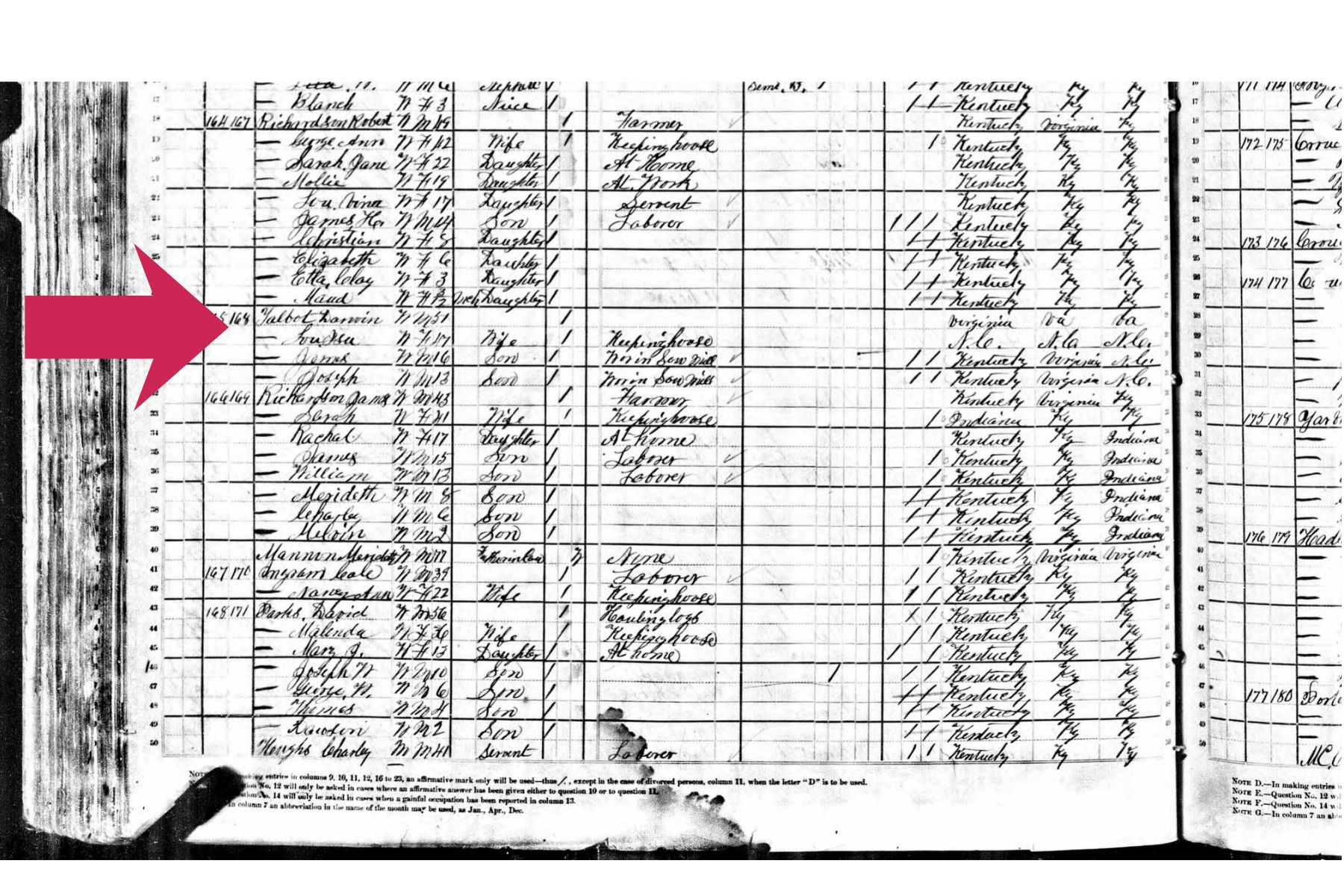
Those details can become much more meaningful when we examine how the evidence fits together rather than treating every record individually.
New records are certainly important. But before launching another search, I’d make sure I understood what I’d already found.
Sometimes that’s exactly where the next clue is hiding.
3. I’d Revisit Previous Research With Fresh Eyes and New Tools
Have you ever returned to an ancestor you hadn’t researched in years and wondered why you reached a particular conclusion?
I’ve found that revisiting older research can be surprisingly productive.
We become better researchers with experience. We learn more about historical records, improve our research methods, and become better at recognizing when evidence doesn’t quite support a conclusion.
What seemed reasonable twelve years ago may look quite different today.
I recently experienced this while revisiting research on my ancestor King Elliott.
I hadn’t worked on his family in twelve years, so I decided to approach the problem differently. Instead of immediately searching for new records, I gathered my previous research and used AI to help me review it.
I worked through what I knew, what I didn’t know, and which assumptions I’d made that weren’t fully supported by the evidence.
I wasn’t asking AI to solve the research problem for me. I was using it to help me examine the existing evidence and identify questions worth investigating further.
Technology gives us other reasons to revisit older research, too. More historical collections are being digitized and indexed, while full-text searching and handwriting recognition make some previously difficult records easier to discover.
I’d make reviewing earlier research a regular habit rather than assuming a family line was finished because I’d reached a conclusion or a brick wall.
4. I’d Use AI as a Research Partner, Not an Answer Machine
If I were beginning genealogy today, AI would definitely be part of my research toolkit.

But I’d be intentional about how I used it.
I’m not particularly interested in asking an AI chatbot to identify my fourth great-grandfather and accepting whatever answer it provides. I want to see the records, evaluate the evidence, and understand why a proposed relationship makes sense.
AI can produce an answer that sounds convincing and still be completely wrong. It can even generate citations to records that don’t exist.
Where I see real value is in using AI to support our research process.
I’d use it to help transcribe difficult handwriting, understand unfamiliar historical terminology, organize information from multiple records, and explore possible research avenues.
I’d also ask it to challenge my conclusions.
For example, suppose I’ve assembled several records that I believe establish an ancestor’s parentage. Rather than asking AI to confirm my theory, I might ask what alternative explanations could fit the evidence or what additional records could test my conclusion.
That’s a much more useful approach than simply asking for an answer.
AI won’t replace careful genealogy research. But used thoughtfully, it can help us become more thorough and effective researchers.
5. I’d Look Beyond the Major Genealogy Websites Much Earlier
I use Ancestry, FamilySearch, FindMyPast and MyHeritage regularly. They’re tremendous resources, and I’d certainly use them if I were starting today.
But I’d be quicker to look beyond them.
One of the lessons experience has taught me is that an unsuccessful online search doesn’t necessarily mean the record doesn’t exist.
Not every record has been digitized. Some digitized collections aren’t indexed, and others are held in local courthouses, libraries, archives, or historical societies.
I’d spend more time learning about the places where my ancestors lived and understanding what records were created there.
Did county boundaries change? What tax, land, probate, or court records survive? Where are those records held? And who would have been included in them?
That last question is particularly important.
Understanding why a historical record was created and who was likely to appear in it can completely change how we interpret an ancestor’s presence or absence.
I’d still use the major genealogy websites as important starting points. I just wouldn’t allow them to define the limits of my research.
Related reading: When Census Records Fail: 5 Community Records That Solve Genealogy Mysteries
6. I’d Research Entire Families and Communities, Not Just My Direct Ancestors
Here’s something that can seem counterintuitive when you’re starting genealogy: Sometimes the best way to find an ancestor is to stop searching for that ancestor.
Instead, look at the people around them.
Our ancestors lived among siblings, neighbors, friends, business associates, and extended family members. Their records can provide important clues about our own ancestors.
This is the idea behind cluster research, sometimes called FAN research for Friends, Associates, and Neighbors.
I’ve found it particularly useful when a direct search isn’t producing results.
For example, I was researching Darwin Talbott, an ancestor who moved from Virginia to Kentucky. I’d located him in an agricultural census schedule but couldn’t find his family in the corresponding population census.
Instead of continuing to search variations of Darwin’s name, I searched for a neighbor listed near him on the agricultural schedule.
That led me to the Talbott family in the population census, where a badly transcribed surname had made them difficult to locate.
Read how researching the neighbors helped me find Darwin Talbott’s family.
That experience reinforced something I’d make part of my research approach from the beginning: Our ancestors didn’t live in isolation, and we shouldn’t research them as though they did.
Studying the people connected to an ancestor isn’t simply a last resort when we’ve hit a brick wall. It’s an effective way to understand family relationships, migration patterns, and community connections.
7. I’d Organize My Research Thinking, Not Just My Files
You’ve probably heard plenty of advice about organizing genealogy files. And yes, having an organization system matters.
But if I were starting today, I’d place just as much emphasis on organizing my research process as on organizing documents.
It’s one thing to download a census record and save it in the correct folder. It’s another thing to remember why you searched for it, what you learned, and how it contributed to your conclusions.
That information can be difficult to reconstruct when you return to an ancestor several years later.
I’d want my notes to answer a few important questions:
- What was I trying to establish about this ancestor?
- Which sources did I search, including unsuccessful searches?
- What evidence supports my conclusions?
- What remains uncertain?
- What should I investigate next?
I don’t think this requires an elaborate system. Timelines and straightforward notes can all help preserve our thinking.
The important thing is having a process we’ll use consistently.
I’d also establish a reliable backup routine. Years of genealogy research are too valuable to leave unprotected.
I’ve shared more about the tools I use in my minimalist genealogy office and how I back up my genealogy research.
👉 My Minimalist Genealogy Office Toolkit
Ultimately, I’d want a system that supports my research rather than becoming another project to manage.
What Would I Do Differently Most of All?
When we’re starting genealogy, it’s natural to focus on discovering new ancestors and finding new records. I still enjoy that part of research!
But experience has taught me that making progress isn’t always about finding something new.
Sometimes it’s about looking at an old record more carefully, questioning an assumption we’ve carried for years, or recognizing a connection we didn’t understand the first time around.
If I were starting genealogy today, I’d take advantage of the records and technology available while developing the research habits that help us use those resources well.
And I’d spend less time measuring progress by the number of names on my family tree and more time understanding the ancestors I’d found and the evidence connecting them.
Now I’m curious about your experience. If you’ve been researching your family history for a while, what’s one thing you’d do differently if you were starting today? I’d love to hear your thoughts in the comments.


