A Research Framework for Finding Your Ancestor When Direct Evidence Disappears
Your ancestor didn’t disappear. You’ve been looking in the wrong records.
Most genealogists spend their entire research lives focused on vital records and census records — because that’s what the major databases are built around. The records that actually break brick walls sit largely untouched.
This guide changes that.
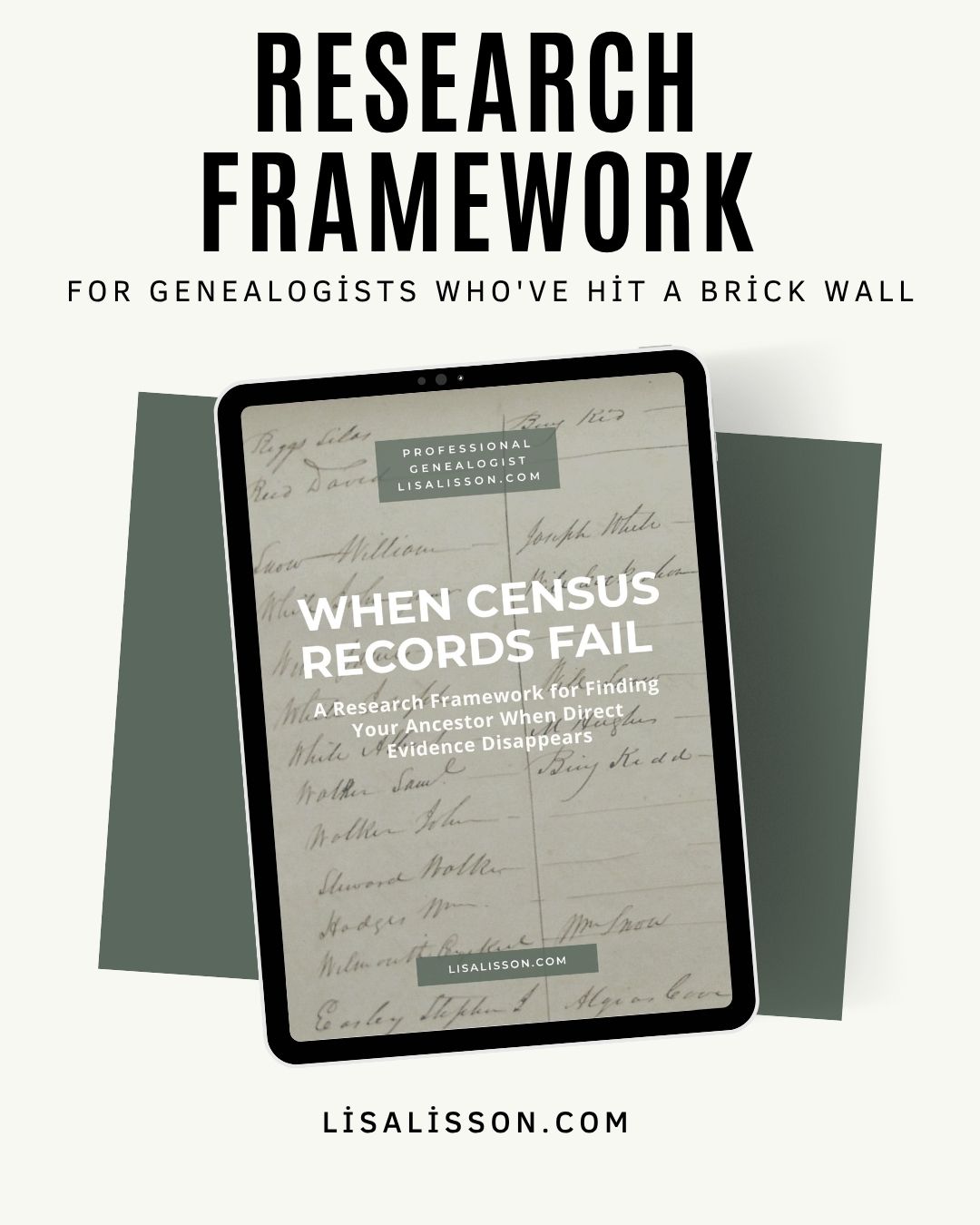
I’ve compiled a 33-page PDF guide built around the Community Research Model, a four-strategy framework for rebuilding your ancestor’s world when direct evidence goes quiet.
Who This Is For
You’re past the basics. You know your way around Ancestry and FamilySearch. You’ve hit a wall that’s been there long enough to feel permanent, and the standard advice stopped helping.
This guide was written for you.
This is not a comprehensive reference to every record type in American genealogy. It’s a way of thinking about hard research problems that I’ve developed over years of working cases where the obvious records were gone and something else had to take their place.
This guide walks you through four research strategies:
- Map the Geography
- Identify the Networks
- Follow the Paper Trail of Daily Life
- Work the Edges
Each strategy is supported by the community record layers most genealogists have never opened, four worksheets to apply the framework to your own brick wall as you read, and a real unresolved case study showing what good research looks like when the evidence runs out before the answers do.
This is a digital download in PDF form.
After purchase, you’ll be taken to a page with your download link. No account required.
About Lisa
I’m Lisa Lisson, professional genealogist and the researcher behind Are You My Cousin? I work the hard cases, the ones where the obvious records are gone and something else has to take their place. This framework is built from that work.
$20 — Instant PDF Download


