
This post may contain affiliate links. Please see our disclosure policy.
Sometimes an ancestor changed his name. Genealogy tips for dealing with name changes in your family tree and finding that ancestor.
When researching your family history, it’s not uncommon to hit a brick wall because an ancestor may have changed their name. Whether the change was for cultural, personal, or legal reasons, this can be a daunting challenge for genealogists.
But don’t worry—there are strategies you can use to overcome this obstacle.
Table of Contents
Why Would an Ancestor Change Their Name?
It happens. Ancestors DID change their names sometimes, and before diving into research, it’s helpful to understand why your ancestor might have changed their name.
Common reasons include:
- Immigration: Many immigrants altered their names to better fit into their new country.
- Avoidance of Debt or Legal Trouble: Some changed names to escape financial or legal issues.
- Personal Choice: A desire for a fresh start or to break away from family could lead to a name change. Another personal choice could be they did not like their name. (That was my ancestor!)
- Cultural Adaptation: Names might be changed to align with local customs or language.
Of course, maybe they wanted to just confuse future researchers! 🤭
Whatever the reason, changing a family surname from the early 1900’s back was really quite simple. One just started using their new name of choice. Researchers are not likely to find a formal record for that name change. It just wasn’t needed.
When this happens, researching ancestry by a last name becomes, well, complicated. What can you as a genealogy researcher do?!
You have some options. Just be prepared this is not a quick process and you will stretch your research muscles. That’s a good thing!
How can I tell if my ancestor changed their name?
Detecting whether your ancestor changed their name can be challenging, but there are several indicators that might suggest a name change has occurred. Here are some clues to watch for:
- Inconsistencies in Census Records: When reviewing census data across different years, pay attention to variations in your ancestor’s name, age, birthplace, or the names of family members. A sudden change in any of these details could indicate a name change.
- Variations in Vital Records: Birth, marriage, and death certificates are crucial documents in genealogy research. If you notice discrepancies in your ancestor’s name across these records, it could be a sign of a name change. For example, a birth certificate might list one name, while a marriage certificate might show a different name.
- Discrepancies in Legal Documents: Legal records, such as wills, land deeds, or court documents, may show different names for the same individual. If your ancestor appears under different names in various legal contexts, it’s worth investigating further.
- Missing Records for Known Events: If you know a particular event occurred, like a marriage or immigration, but cannot find the corresponding record under your ancestor’s known name, it may be due to a name change. Searching for variations or different names might uncover the missing documentation.
- Family Stories or Oral Histories: Sometimes, family lore can hint at a name change. If stories have been passed down about an ancestor changing their name, even if they seem vague or uncertain, it’s worth considering as a potential lead.
- Unusual Gaps in the Timeline: If there’s a gap in your ancestor’s timeline where they seemingly disappear from the records, they may have changed their name around that time. Investigating where they were living or significant events during that period might provide clues.
By carefully analyzing the records you have and looking for these types of inconsistencies, you can begin to piece together whether your ancestor may have changed their name and start exploring alternative names or spellings in your search.
3 Genealogy Research Strategies To Try If You Suspect Your Ancestor Changed His Name
Let’s take a close up look at William Henry Haley of Charlotte County, VA – my ancestor who changed his name.
(This is based on the research report I completed as part of the ProGen Study Group 11.)
Were William Henry Haley and George W. Haley the same man?
William Haley “disappeared” from the records prior to 1883. Despite hours of research, no evidence of William’s existence prior to 1833 could be found. Obviously, he was somewhere! Oral history and William’s earliest known record of existence were the starting point to re-construct William’s early life. [Note: William H Haley was my Great Great Grandfather.]
1.Oral History Can Hold Clues To An Ancestor Name Change
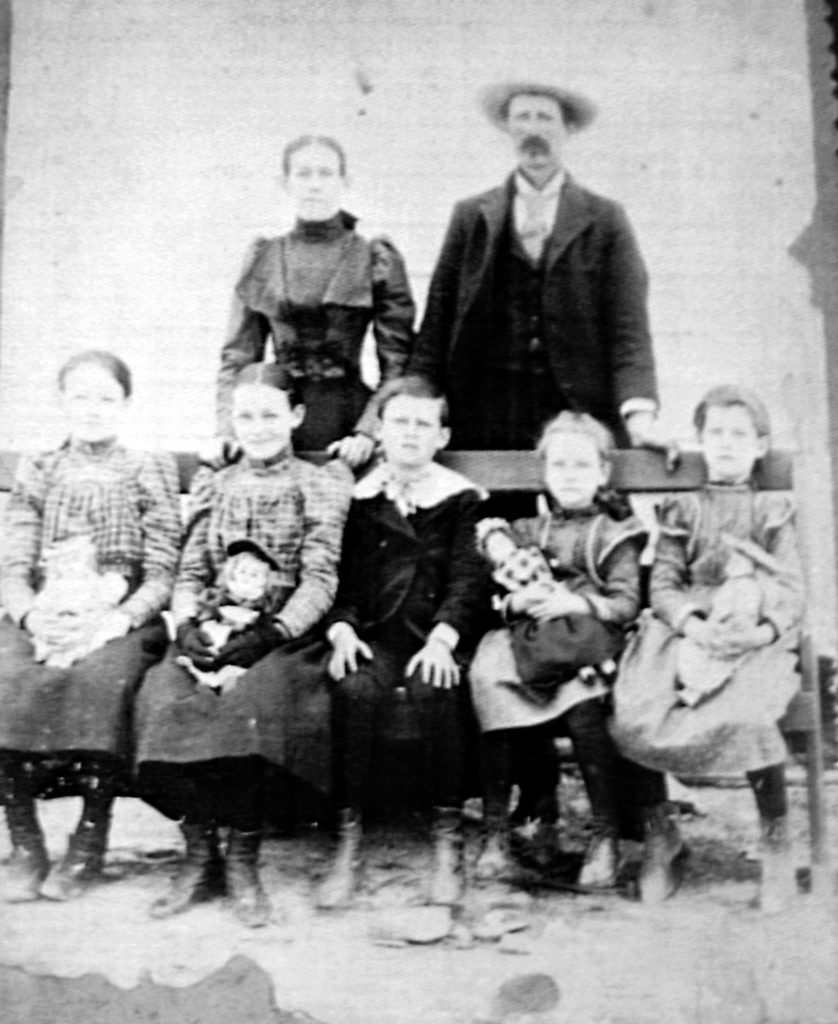
Oral history for William’s life after his 1883 marriage and until his death in the 1940’s is strong and abundant. At the time of this research project, many of William’s grandchildren were still living and passing on their knowledge of his life. Unfortunately, those mentioned in this post have since passed away.
Anita Carr Talbott and Percy Owen (grandchildren of William Haley) provided much of the oral history of William Haley. Both grandchildren knew William Haley personally well into their early adult years. Interestingly, neither knew with certainty the name of his parents. Percy reported that the Tribble family was “somehow related”, but he was unsure of the exact relationship.

Both descendants reported William (known as Will to family and friends) Haley lived all his life in Halifax and Charlotte Counties, VA. As a young man William worked on the Clarkton Plantation as a laborer and even married the overseer’s daughter Clara Holt. William went on to become the overseer of Clarkton Plantation after the death of his father-in-law Branch W. Holt. Both Haley grandchildren also reported that the Haley surname at times was spelled Hailey.
One last clue in the family’s oral history came from Dorothy Adams Haley, wife of William’s son Clyde. Dorothy reported that William Haley’s father was “Cas” (pronounced with a short “a” sound as in “cat”). Beyond that tiny clue, Dorothy did not know if Cas was a nickname or any more about him.
That’s okay. I’d take any clue and all clues!
2. Take the Genealogy Research Back to the Traditional Genealogy Records.
Seek out all sources of genealogy information. Do not skip any steps here. Always view the original document when possible. The extra effort is crucial. For example, you may already know your ancestor’s death date and location from another source, but get that death certificate anyway!
DEATH CERTIFICATE
William Haley died 4 March 1948 in Charlotte County, VA. From family present at his death and newspaper articles about his death, I knew his date of death and the circumstances surrounding his death. His death certificate was still sought!
That death certificate reveals his full name to be William Henry Haley and his birth date was 22 Dec 1861. His father is listed as Kays Haley and his mother as Ann Triple. Both were born in Halifax County, VA. The informant on the death certificate was George Nichols, son-in-law of William Haley. [George Nichols was the husband of William’s daughter Daisy Haley.]
Hmmm…. Kays Haley and Ann Triple. Yes, these are important clues! Keep reading.
One thing that is important to consider it the death certificate is considered a secondary resource. Was the informant someone who knew the deceased well? Would he have had accurate information on William’s parents? Use the information on death certificates as clues if the informant would not have had first hand knowledge of all generations.

THE MARRIAGE RECORD
An 1883 marriage registration record shows William H. Haley married Clara Holt in Halifax County, VA. This information would have been provided by William and Clara and is considered a strong source. The marriage registration record for this couple names William’s parents as S. C. and M. A. Haley. All parties were from Halifax County, VA. The discrepancy between William’s father name of Kays on the death certificate versus S. C. in the marriage registration continued to cause confusion.
Confirmation of William’s parents was needed to determine if George Haley and William Haley are indeed the same person.
CENSUS RECORDS
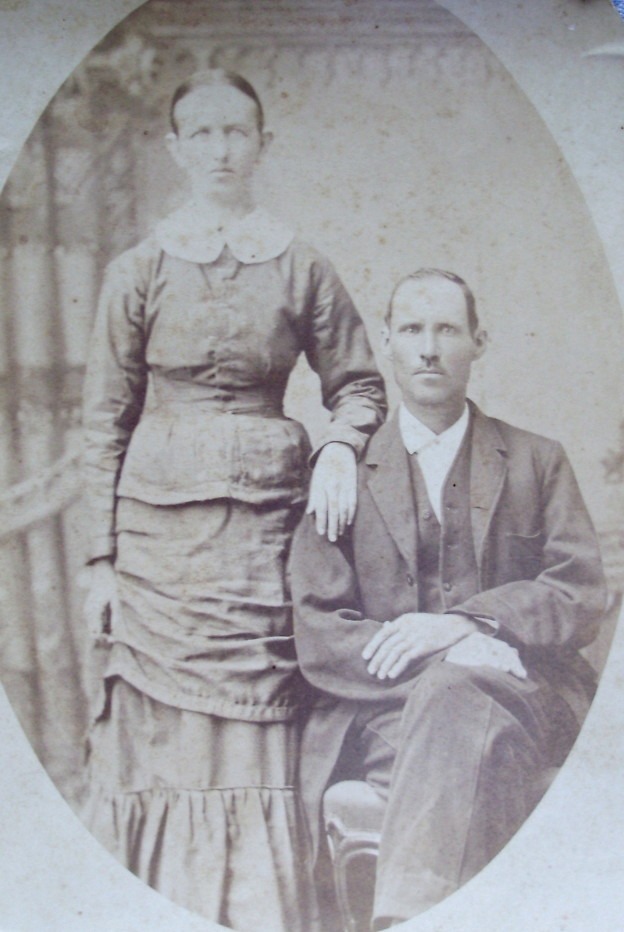
William was not born at the time of the 1860 census. No S.C. Haley is found in census for this time. There is a Stephen Hailey (age 21) living in the home of Jesse Hailey in the Northern District of Halifax County, VA. He was working as a farm laborer and is listed as being born in VA. No Triple family was found in the 1860 census record for this area. There is a Mary A [Ann] Tribble age 21 living in the home of Matthew and Mary Tribble in the Northern District of Halifax County.
Remember that Percy Haley stated the Tribble family was somehow related to the Haleys. I was on the trail!
In the 1870 census William Haley would have been 9 years old. No William Haley is found in the 1870 federal census matching the William Haley in question. There is a George Haley (Hailey) age 9 in the household of Stephen (age 28) and Mary (age 28) Hailey in Staunton Township of Halifax County, VA. Stephen and Mary are living next door to Matthew and Mary Tribble. This is the same Haley family enumerated in 1880 as the S. C. Haley family based on consistent neighbors in both census records. Neighbors in 1880 also included Mary Tribble, mother-in-law to Stephen Haley.
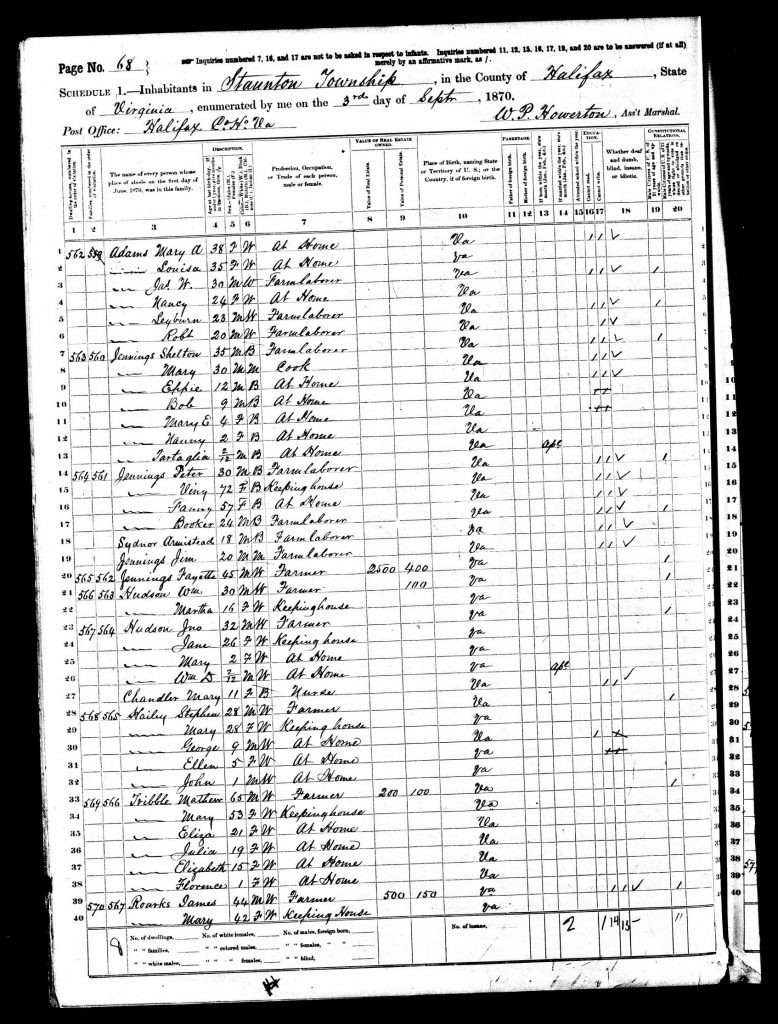
S. C. Haley is now determined to be Stephen C. Haley.
I was getting closer, but not there yet…..
William Haley (approximately age 18 or 19) is not found on the 1880 federal census of any state. George W Haley (age 18) is found to be living in the household of James F Guthrie in the Staunton District of Halifax County, VA. George W Haley is listed as a farm laborer on the Guthrie farm. The Guthrie household is number 31. The household of Stephen C. Haley is 194 in the same district. Neighbors of the Haleys again included Mary Tribble, mother of Mary A Haley. This is the first record to show Stephen or S. C. Haley as being Stephen C. Haley.
This 1880 census shows George Haley living out of the household of Stephen C. Hailey and working as a farm laborer on another farm. This census also gives George’s middle initial as W. Could George’s middle name have been William? George is also listed as the same age as William would be. Interestingly, both S. C. and M. A. Haley went by their middle names as did several of their children.
Could they have continued the tradition with their son George?
By the 1900 census George Haley no longer shows up in the census records. William Haley (age 38) is living in the Staunton District of Halifax County, VA with his wife Clara [Holt] Haley and 5 children. William’s age and occupation as farm laborer continue to match what George’s age and occupation would have been. Steven C Hailey and wife Mary A (both age 62) are living in the Staunton District as well.
This was still not enough to definitively state George Haley and William Haley were the same man, but I was on the way.
🤔Stuck trying to find an elusive ancestor? Ready to stop the aimless search of the genealogy databases that leaves you frustrated and still NO results?
Check out the VIP Genealogy Intensive Day where we focus on getting your genealogy research back on track with a day dedicated just to Y-O-U. 😊
3. Use County Heritage Books For Local Family Knowledge
Halifax County Virginia Heritage 1752-2007 lists Stephen C. Haley’s full name as being Stephen Caswell Haley. His nickname is listed as Kas or Cas. Stephen Caswell Haley was known as Cas, and Cas was the father of William Haley.
[The genealogy “happy dance” may have ensued at this revelation!]
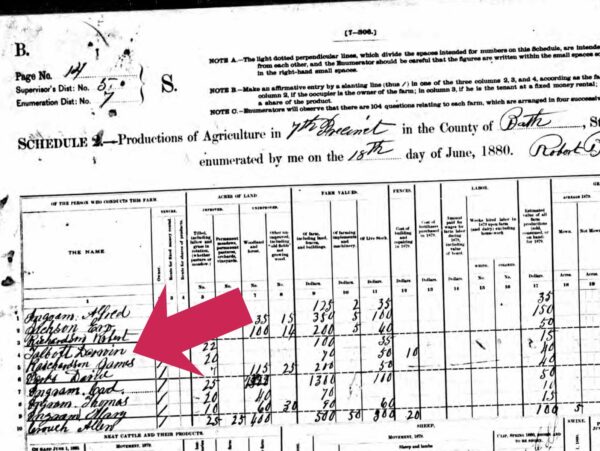
This information was submitted by Haley family descendants of Stephen C. Haley through his son Robert Alexander Haley. While the entry provides no formal source citations for the facts stated, a note was added that records from the Halifax County courthouse and family stories were used. The family stories are secondary sources in nature and yet support the limited oral tradition from William Haley’s descendants regarding William’s father.
Were William H. Haley and George W. Haley the same person?
When traditional records are placed alongside the Haley family’s strong oral history, the evidence supports that they were. The “why” and “how” George became William may never be fully known. A legal proceeding was not required for a name change during that time period. Regardless of which name he chose to go by, William Haley and his wife Clara left a rich legacy of strong family bonds that continue among their many descendants today.

Your Take Away for Researching Ancestors Who Changed a Name
When you research your ancestors, keep these ideas in mind:
- Research into brick wall ancestors is not quick. There is usually no one record that will provide the answer you are seeking.
- When you exhaust traditional records, think outside of the box. What other types of information and records can you find and use. These include people, written histories, personal papers, etc.
- Never trust just one source of information.
Do you suspect an ancestor changed his name? Let me know in the comments!



Name changes and missing parents are so challenging! My GGM did not know who her MOTHER was! Her death certificate states “Mother Unknown” with information given by my GGF who was married to her for 60+ years. My grandmother, mother and aunt (who lived with them all their lives) all support this fact.
To complicate matters, GGM also always stated that her father was not a Williams (her maiden name) but a Lloyd and that he was adopted by the Williams family when he was young. GGGF’s death certificate lists father as Mr. Lloyd and mother unknown! Information provided by his adult son.
I continue to work to figure out who these missing mothers are, but it is a challenge.
That is a tough and challenging brick wall! Keep chipping away at it. 🙂
An ancestor was Josiah he enlisted in the civil war and was listed as Joseph S. After he came home some listing was Joe Sire, which is a slurred Josiah. Some times it is the uneducated tongue that causes the problem. Another Melvina is listed by family as Melly Viney. Happy hunting.
Thanks for the reminder that sometimes name “changes” came about by pronunciation variations.
I was working on my Mom’s biological family & my 2nd great grandma’s Find a Grave memorial stated that her husband, herself and her two oldest children (both boys)had taken the name (Crompton) as an alias. The 3 males were all baptized under the surname “Burke” prior to them coming to the states. I was a little put back. Now I have to find these men back in England. If you have any tips on that, I would greatly appreciate it.
S.
First, familiarize yourself with genealogy research and records in the UK. It’s a bit different than in the U.S. In the records, look for the Burke men either in the same household or in close proximity to each other. This will help ensure you have the correct men. Also, seek out a Facebook group focused on UK research where you can ask specific questions about UK records, etc.
I have a 6th great grandfather who seems to have dropped in out of thin air and populated the Americas. He left France, was rumored to be a sea faring trader, rumor is a vessel crashed and he and his brother ended up on different islands. Great grand married on St Thomas had a few children then moved his family to PR. He exists on St Thomas and in PR as Mauricio, wife passes he remarries has lots more kids. Before 2nd marriage his name changed to Santiago, his 1st wife also changed her name, well documented in kids records and her family’s documents travel sponsorship etc. Postmortem the surname obtains an additional “s” he always claimed his father was Jean his mother’s name and their surname were spelled various ways due to phonetics. No record of him or mystery brother in France anywhere. 20 relations here to CA searching for over 20 years to no avail. The mystery of Gueit.
What a mystery!n I’m curious if you have tried DNA testing and have any matches that could lead back to France. You might want to consider consulting with a genetic genealogist.
I have a great grandmother who was definitely hiding from something. Her & her sister just appear in 1910 census in Arkansas with a man they said was their father, Jerry Fitzgerald. But they were most definitely not of Irish decent. I remember as a child visiting her quite often (we lived in same town) and wondering how come she looked like a indian, when we were not? She never would cut her hair, and always wore her gray hair in one scrawny braid which reached below her waist & was then wrapped around itself & pinned into a bun. Her completion was a bit darker than all her grandchildren’s, & she was very short (abt 4 ft 5″) and bow legged. She chewed tobacco constantly, and had a metal bracelet on her ankle which looked to have no way to take off, like it was one piece. And she never did take it off; ever. My mom asked her (also her grandmother) when she was young why she always wore it, & she said she wore it because of her arthritis. Mom also told me she asked her what nationality they were one time, and she said they were Black Dutch.
Anyway, nothing on any of the 3 prior to 1910. It was like they just appeared there. The girls said their mother died abt 1899 (when my grandmother was only 2 yrs old), & was buried in Cotton Plant, Arkansas although no proof of this has ever been found. My great grandmother told one of her daughter’s that her mother’s name was Mary Jane Watkins, but told another daughter that her name was Mary Hanks. A third daughter claims she was told that her mom’s family was Native American. And every single record we have for her, she changes her age, and her parents birth place. And, she supposedly filed for a delayed birth certificate in Auvergne, Arkansas when she filed for SSN, however when we tried to order copy, we were told that they had no such record for her there.
My mom has been working on trying to find out where she came from for more than 30 years, & I joined her in trying to locate where great grandma Stella really came from about 10 yrs back. Mom has also had MtDNA test done a few years ago, but has been unable to connect to even one of the matches, as of yet. I am sure that her last name was not really Fitzgerald, just as I am also sure we have absolutely no idea what her real surname was.
I have one other relative that changed his name but we know why he did that, “as bigamy, even in the early 1900’s is considered a serious crime”, stated a Scotland newspaper that published notice of his crime and punishment of 2 yrs years jail time.
Yep, I have to agree, that why our ancestors changed their names range from one end of the spectrum, to the other, and each carrying a fascinating story behind it.
Wow, that’s a fascinating family mystery!
I have a great uncle who dropped off the face of the earth after leaving his wife and five children in 1928. She filed for divorce the following year. He couldn’t be found by the court, last known address was Springfield, IL. When his son died in WWII in 1944, there is no mention of him in the obituary. No records (census, military, vital, directories, etc.) mention him after 1922. A brother’s obit in 1948 mentioned he was living in Chicago, but I don’t know if that was true. No death certificate for him can be found in Illinois, or nearby states. I think he did not want to be found.
I think you are correct. It’s tough for us as researchers, though. Earlier in history, an individual could easily change their identity and start a new life elsewhere.
My ggf Charles Andrew Branden was born in Wurtberg Germany abt 1876. He moved to Lynn Massachusetts and married Marion Jeffrey. The marriage record says his parent’s we’re Christian and Anna. And then nothing
My maternal grandmother had five siblings, two brothers and three sisters. Their surname was Bauer. Family oral history revealed that both boys changed their surname from Bauer to Evans but we were never sure why. So far, I have been able to determine that both worked as stagehands at one of the big theatres in Philadelphia and that the name change occurred sometime between 1910 and 1920 as the surname appears differently on the Census records from those years. Those lines of the family always remained Evans and I’m working to make contact with their direct descendants to see if anyone has further details to share as all six from that generation have passed. We assumed it might have something to do with German heritage and/or their jobs since only the boys changed the name but would love to solve the mystery for my Mom.
This is fascinating. My sister and I have been trying to find out about our paternal grandfather and where he came from (he told everyone he ran away from home as a boy –claimed he had ‘bad parents’. He told us he was Scottish and English. Neither is true as I had a DNA test. Turns out I have 35% Ashkenazi Jewish in my DNA–a total shock. So now we pretty much have it down to our paternal grandfather (we know his wife– our paternal grandma, came from Austria and was Orthodox Russian Catholic). Our maternal side is mostly Italian and a little German (our 94 year old mom took a DNA test!). We now strongly suspect our grandfather changed his name (his name was Fred Reed)– certainly not a Jewish name- and we are pretty certain the Ashkenazi was from him. We found his 1917 WW1 draft record, his marriage, 1919 and 30’s census with kids etc… Nothing at all prior to the draft–cannot find any birth record. So–this is one reason we think he changed his name– Any ideas where we can search? TIA:)
Pretty certain my Maternal Great-Grandmother made up her/their name which was Sawyer. Adding to that, I have the Sawyer name on my paternal side. But perhaps that’s a good thing, because I can see those Sawyers 100% match my paternal side. I have zero Sawyer matches or matches of matches that are on my maternal side. Further, she said her maiden name was Quigley and again, I have no matches or matches of matches to that name and can only find her (if it was even her) in the US Census in 1930, living in Philadelphia with the Little Sisters of Charity. Another conundrum is that I’m seeing matches to quite a few of French Canadians. And that can only be on my mother’s side (surprise!) because the rest of the branches are accounted for. I have no idea how to figure out their names. *sigh*
Sometimes the mystery of a name change is so convoluted!
I managed to prove my grandfather s identity and former name through medal cards and now recently through DNA test. Absolutely fascinating…Science doesn’t lie
My 3rd great grandfather, born in England, was illegitimate. His mother had filed a bastardy bond and the court judged that the purported father could show no evidence that he was not the father. My 3rd great grandfather was baptized with his father’s surname as the “spurious” child of his mother (she never married the purported father). When my 3rd great grandfather married, he used his father’s surname. When he baptized his children, he used his mother’s surname. All the children were baptized into the Church of England on the same day with ages ranging from 9 yrs to infancy. Which surname do I record for these children in my family tree?
Maggie, there is no right or wrong here. I typically record the surname as it appears in most records for the family tree. When attaching records, I always use the name as it appears on the record itself. I also attach note to the profile explaining about the name change/variation.
We did find an additional piece of info. In 1921 Marvin Coign enlisted in Army. Was at Louisville KY then Camp Dix NJ where he was courtmartialed and dishonorably discharged. Do not know whether it entailed any prison time or if he was just discharged. We have found nothing after this time.